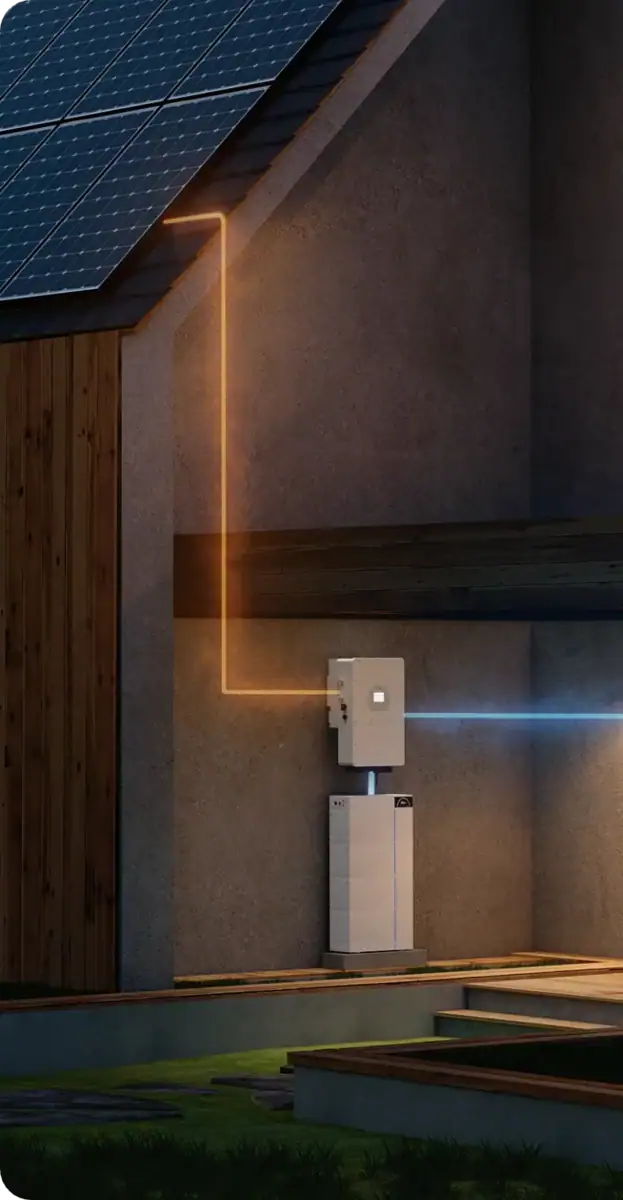


Why cold storage is a strong solar-plus-storage application
Refrigeration compressors, evaporator fans, condensers, pumps, lighting, and material-handling equipment create a substantial and often predictable load. Solar generation can offset part of this daytime demand, while a battery can capture surplus PV and discharge during late-afternoon peaks where system response and overload capability permit. Brief starts also need motor-starting analysis; they do not necessarily drive a tariff based on average interval demand.
The value stack may include:
-
higher photovoltaic (PV) self-consumption instead of exporting or curtailing surplus;
-
peak shaving when compressors and other loads overlap;
-
time shifting from solar hours into evening operations;
-
backup support for selected refrigeration, controls, alarms, and IT loads; and
-
better visibility into energy use by temperature zone and operating shift.
Commercial PV-plus-storage can be configured around a warehouse’s operating priorities. The exact economics depend on the site tariff, load profile, climate, and operating policy.
Start with the refrigeration load, not the roof area
Collect at least 12 months of interval electricity data where available. Separate refrigeration from non-refrigeration loads and identify:
-
compressor starts and coincident peak events;
-
defrost schedules and electric defrost power;
-
evaporator and condenser fan operation;
-
loading-bay activity, door openings, and air-curtain operation;
-
product pull-down or blast-freezing cycles;
-
lighting, conveyors, forklifts, and office loads; and
-
critical circuits that must remain energized during an outage.
The battery power rating should cover the targeted peak reduction or backup load. The battery energy rating should cover the required duration after accounting for usable depth of discharge, conversion losses, reserve, and expected degradation. A short compressor spike and a four-hour outage are different sizing problems.
Coordinate PV, battery, and refrigeration controls
Cold stores benefit from coordinated controls because some thermal flexibility may be available. Subject to product and food-safety requirements, operators may pre-cool during strong solar production, shift non-critical defrost, or sequence compressors to avoid coincident starts. These actions must be validated by the refrigeration engineer; battery dispatch should never compromise required temperature limits.
An energy management system (EMS) can prioritize solar self-consumption during operating hours, reserve battery energy for the evening peak, and maintain a minimum state of charge for backup. The controls should also define what happens when PV falls unexpectedly, the battery is full, communications are lost, or the grid returns after an outage.
For larger sites, Deye’s MS-G215 microgrid system provides a product route to investigate when the project requires coordinated storage and microgrid functions. Confirm all power, energy, transfer, and grid-code requirements against the selected technical documentation.
Design around cold-storage humidity and condensation
Energy savings are only useful if product and building conditions remain stable. Warm, humid air entering through doors can condense on cold surfaces, increase frost, and raise refrigeration energy use. Deye’s guide to preventing condensation in cold storage facilities highlights the need to address door management, insulation, airflow, and moisture control together.
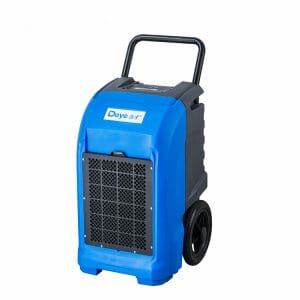
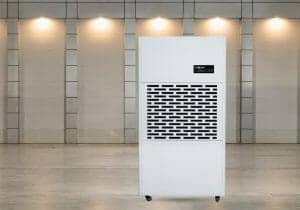
For a suitable warmer loading or processing area, the Deye DY-8480C industrial dehumidifier is one product to assess. Its published moisture-removal rating is measured at 30°C and 80% RH; it does not establish freezer suitability or capacity at low temperatures. Confirm the permitted operating range and moisture load before selection. Dehumidification adds electrical load, so include it in the interval-load model and in the battery dispatch strategy. Use dew point—not relative humidity alone—to evaluate whether moisture-laden air can condense on a cold surface.

Plan backup by consequence, not by nameplate load
Keeping an entire warehouse operating during an outage may be technically and financially impractical. Define the critical-load hierarchy first:
-
refrigeration controls and monitoring;
-
selected compressors or a minimum holding-temperature circuit;
-
fire, security, communications, and access systems;
-
alarms and remote monitoring; and
-
lighting and safe egress.
Then determine the required ride-through time, transfer sequence, generator coordination, and restart behavior. Compressors can have high starting currents, and some equipment may not restart safely after a voltage event. The power conversion system (PCS), switchgear, protection settings, and controls must be designed as one system.
Account for roof, weather, and electrical constraints
Cold storage warehouses often have large roofs, but the usable PV area may be limited by structural loading, insulation, skylights, fire access, refrigeration equipment, and maintenance paths. Model soiling, snow, shading, temperature, and seasonal production. Verify the service entrance, short-circuit rating, transformer capacity, and export limit before finalizing the array.
Battery placement needs its own review. Confirm clearances, fire protection, ventilation or thermal management, drainage, flood risk, service access, and local permitting requirements. Outdoor-ready does not mean every location is automatically suitable.
Measure results after commissioning
Install meters that separate PV generation, battery charge/discharge, refrigeration, dehumidification, and grid import. During commissioning, verify current transformer (CT) polarity, demand-control thresholds, battery reserve, compressor sequencing, and alarm paths. Track outcomes such as:
-
maximum grid import and demand-charge intervals;
-
PV self-consumption and curtailed energy;
-
battery cycles and usable state-of-charge (SoC) range;
-
refrigeration temperature compliance;
-
defrost and compressor runtime; and
-
outage response and recovery.
Monitoring can help multi-site teams review operating data, but local protection and the facility control system remain essential.
Make the business case transparent
Model energy charges, demand charges, export rules, curtailment, battery losses, degradation, maintenance, financing, and any incentives. Show conservative and stress cases for hot weather, lower solar yield, higher throughput, and an outage occurring when the battery is not full. A transparent model is more valuable than a universal savings claim.
Solar-plus-storage can make cold storage more controllable, but it is not a substitute for good refrigeration practice. The strongest projects combine efficient equipment, moisture control, measured loads, coordinated controls, and a clearly defined resilience objective.
FAQ
Can solar-plus-storage keep a cold warehouse running during a grid outage?
It can support selected loads if the battery, PCS, switchgear, and controls are designed for backup operation. The required runtime and compressor starting behavior determine the necessary power and usable energy.
Should a cold storage battery be sized for the whole refrigeration load?
Not necessarily. Size it from the project objective: peak shaving, solar shifting, short ride-through, or extended backup. Separate critical and non-critical loads and model the required duration.
How does humidity affect the energy case?
Moisture entering the space can create condensation and frost, increasing maintenance and refrigeration demand. Door control, insulation, airflow, dew-point management, and dehumidification should be evaluated alongside PV and storage.
Is a large roof enough to justify solar-plus-storage?
No. Roof area is only one constraint. Load coincidence, tariff value, structural capacity, interconnection limits, battery location, fire requirements, and operational priorities determine project feasibility.
What data should an EPC request first?
Request interval demand, refrigeration and defrost schedules, temperature requirements, door activity, tariff and export rules, roof and electrical drawings, critical loads, outage duration targets, and maintenance constraints.
Build the right cold-storage project brief
Evaluating solar-plus-storage for a cold storage warehouse? Contact Deye with interval data, refrigeration capacity, temperature requirements, tariff details, roof plans, and critical-load priorities. That information lets the design team distinguish a peak-shaving project from a resilience project—and size the system accordingly.