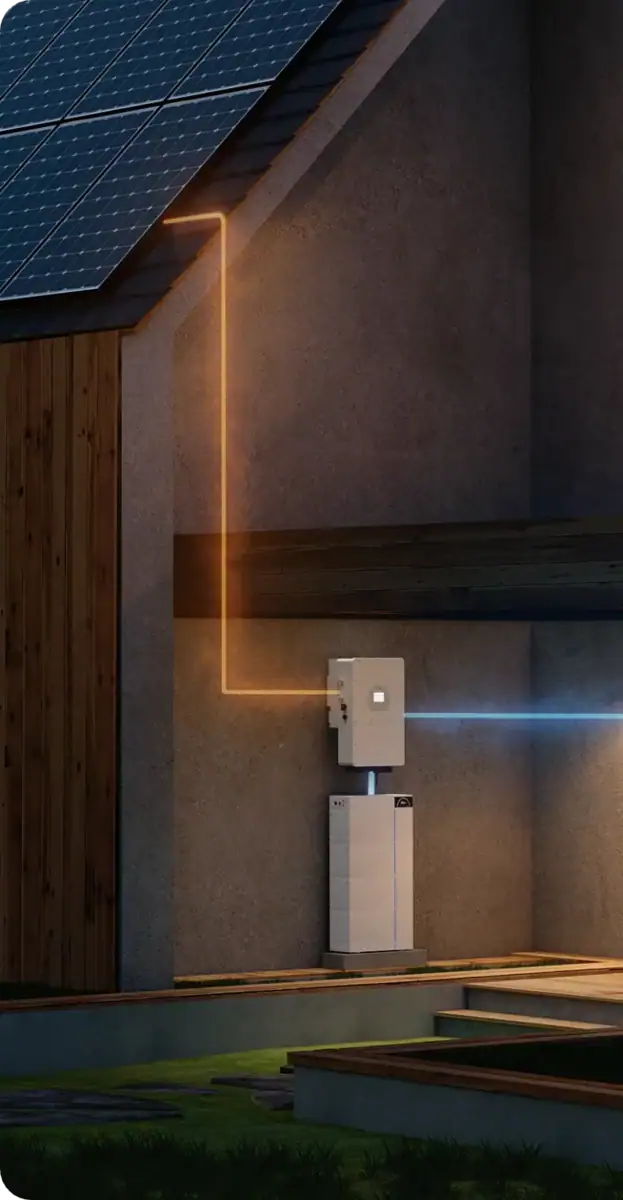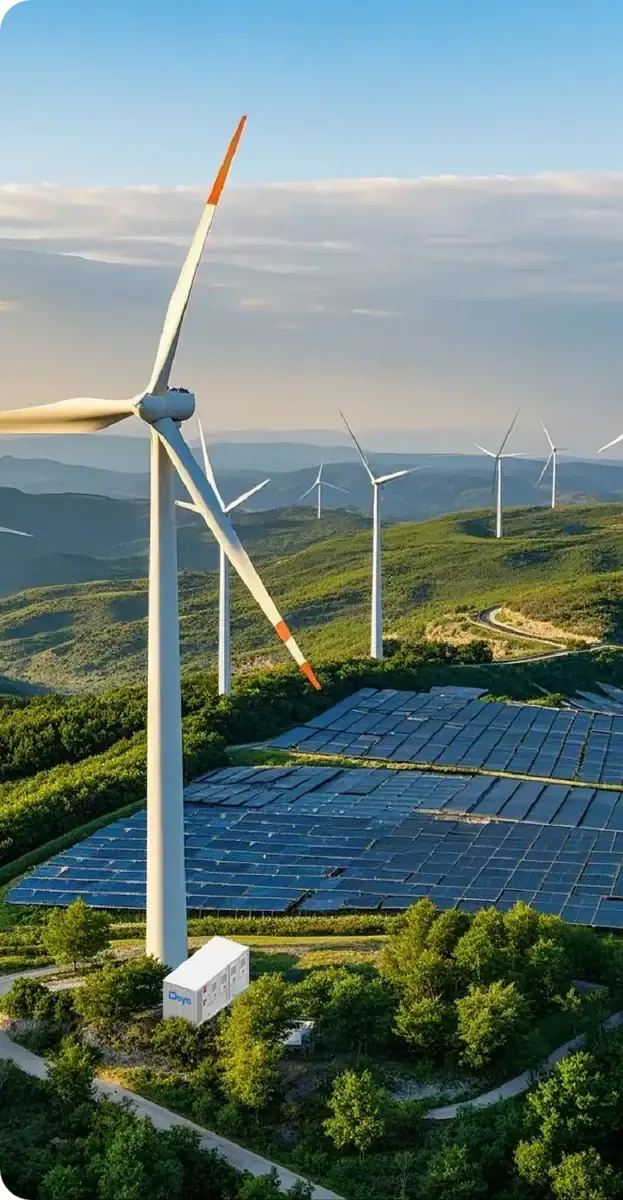

A solar-storage-diesel microgrid should be designed around the site’s time-based load profile, required continuity of supply and operating environment. Size battery power and energy separately, model solar production through difficult seasons, and define how the generator and inverter will share control. Equipment capacity alone does not establish a reliable islanded power system.
For EPCs and remote-site operators, the objective is a defensible balance between fuel logistics, capital cost, maintenance access and service availability.

1. Define the loads the microgrid must actually support
Collect interval demand data and short-duration measurements for motor starts and large load steps. A daily energy total cannot reveal a pump’s starting requirement. Separate critical loads, schedulable loads and loads that can be shed automatically.
Record operating hours, phase balance, seasonal changes and planned expansion. Include inverter auxiliaries, battery cooling, communications and standby consumption in the energy budget. Specify both acceptable interruption time and required outage endurance: telecommunications equipment and workshop machinery may need different arrangements.
2. Size battery power and energy independently
Battery energy, measured in kilowatt-hours (kWh), determines duration. Inverter output, measured in kilowatts (kW) and kilovolt-amperes (kVA), determines which loads can run together. Check continuous output, reactive demand and transient capability against the actual load sequence.
For an illustrative constant 32 kW critical load over four hours, the delivered energy requirement is 128 kWh. Assuming an 80% usable state-of-charge window and 92% discharge-path efficiency gives:
Nominal battery energy = 128 ÷ (0.80 × 0.92) ≈ 174 kWh.
These are example assumptions, not Deye performance figures. Add project-specific allowances for end-of-life capacity, temperature, auxiliaries and contingency. Keep generator-start reserve separate from routine solar shifting.
This calculation is not a selection for any particular storage cabinet. Begin project discussions with Deye’s C&I ESS solutions and request a configuration approved for the destination market.
Regional product note: the MS-G215 Micro Grid System is identified by Deye as a CHN regional version. Treat it as a China-market reference, not an internationally approved specification. Its published black-start and generator-connection features require regional and project confirmation. The cabinet and the standalone hybrid inverter discussed below illustrate different architecture routes; they are not a verified equipment pairing.

3. Model solar production and generator duty together
Use location-specific solar data, shading, module temperature, soiling and system losses. Simulate chronological dispatch across seasonal conditions, including consecutive cloudy days. Annual solar energy can look adequate while a remote site still requires substantial generator operation during a poor-solar period.
Select generator capacity against coincident load, battery charging demand, altitude and temperature derating, motor starts and the generator manufacturer’s permitted loading range. Avoid sizing only from the battery charger’s maximum setting.
Compare several dispatch strategies: daytime solar priority, generator charging during efficient operating windows, and additional reserve before forecast poor weather. Estimate fuel from the generator’s load-dependent consumption curve rather than a fixed saving percentage.
4. Define who establishes voltage and frequency
A permanently islanded site needs a source capable of establishing the electrical reference. Document which equipment forms the grid during normal operation, generator operation, black start and recovery after a trip. Verify synchronization, reverse-power protection, neutral and earthing arrangements, and breaker interlocks with the system designer.
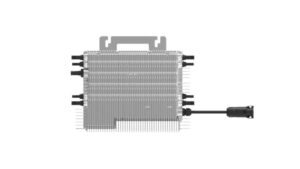
The Deye 100–125 kW three-phase hybrid inverter family lists diesel-generator energy storage support. This capability still requires confirmation of the selected model’s generator interface, battery compatibility and operating limits.
Use an energy management system (EMS) to coordinate dispatch. Write a cause-and-effect schedule covering low state of charge, failed generator starts, communications loss, fuel shortage and overload. Establish minimum generator runtime and restart delays from approved equipment requirements.

5. Design for remote maintenance and verify transitions
Account for dust, corrosion, flood level, ventilation, cable routes and safe maintenance access. Specify locally available service parts, alarm escalation, offline operating capability and an operator recovery procedure.
Commission by witnessed scenarios: cold start, largest approved load step, generator connection and removal, solar curtailment, low-battery recovery and loss of communications. Confirm acceptable voltage and frequency excursions against the loads’ requirements. Record the actual configuration and test conditions.
Compare operating strategies before buying equipment
Run the same load and weather data through each proposed configuration. Compare annual fuel use, generator starts, operating hours, solar curtailment and battery throughput. Also examine the worst operating week: an annual average can hide a recurring reliability problem.
| Operating condition | Intended response | What to verify |
|---|---|---|
| Strong solar, low demand | Supply loads and charge the battery; curtail excess if necessary | Battery charge limits and stable curtailment |
| Evening demand | Discharge within the permitted reserve | Available energy and inverter loading |
| Extended poor solar | Start the generator before reserve becomes inadequate | Start reliability, fuel stock and charging allocation |
| Large scheduled load | Coordinate generator support or reschedule demand | Transient performance and load-shedding sequence |
Treat these as a control narrative to develop, not universal switch settings. A generator-start threshold needs enough margin for startup delay, a failed start and the load expected during recovery. An unnecessarily high threshold can increase runtime; an excessively low one can leave insufficient energy for a controlled recovery.
Assess the commercial result through lifecycle cost, including delivered fuel, service visits, battery replacement assumptions and downtime exposure. A configuration with the lowest modeled fuel consumption may require more equipment and maintenance than the site can support. Document these tradeoffs so procurement compares complete operating solutions.
The final specification should identify who owns the dispatch logic, who can change settings and how changes are logged. Remote diagnostics are useful only when the site team has a clear response procedure.
Frequently asked questions
Can the diesel generator be removed completely?
Possibly, but only after assessing seasonal energy deficits, required availability, storage autonomy and an alternative recovery plan. A remote site with expensive outages may retain diesel backup even when modeled annual generator runtime is low.
Does a larger battery always reduce fuel consumption?
No. Additional capacity helps only when dispatch can use it. Limited solar surplus, high standby loads, unsuitable charging limits or excessive reserve requirements can restrict the value of more storage. Compare lifecycle costs through chronological modeling.
What information should an EPC request first?
Request load profiles, motor-start data, critical-load priorities, site climate and altitude, existing generator details, fuel delivery costs and outage requirements. These inputs establish the operating problem before equipment selection.
Develop a microgrid around your site’s operating requirements
To discuss a configuration with Deye’s project team, send:
- Interval demand, motor-start data and critical-load priorities.
- Required autonomy, outage tolerance and generator specifications.
- Destination market, climate, altitude and fuel-delivery constraints.
Ask the team to confirm regional availability and the inputs needed for detailed engineering.