
The three voltage checks every design needs
1. Cold-weather open-circuit voltage (Voc)
Voc is highest when a module is cold and unloaded. Calculate the string’s maximum Voc at the site’s minimum design temperature, not at standard test conditions (STC). A simplified check is:
String Voc(cold) = modules in series × module Voc adjusted for minimum cell temperature
The result must stay below the inverter’s maximum DC input voltage, including the design margin required by local practice and the manufacturer’s instructions. Use the module Voc temperature coefficient and the site design temperature required by the applicable engineering method and local rules. Also check the maximum system voltage of modules, cables, connectors, and DC switchgear.
2. Hot-weather maximum-power voltage (Vmp)
Module voltage falls as cell temperature rises. At the site’s maximum operating temperature, calculate string Vmp and confirm it remains inside the inverter’s MPPT operating range. A string may satisfy the absolute maximum DC-voltage limit yet operate below the MPPT window in hot conditions, reducing harvest. Also check cold-weather operating Vmp against the upper MPPT boundary and any narrower full-power voltage range.

3. Startup and operating thresholds
Check the inverter’s startup voltage and minimum operating voltage as separate values. Startup may require a higher voltage than the lower edge of the MPPT range. Check any minimum input-power requirement and the permitted electrical configuration of each MPPT. Startup is a separate check at the relevant low-light voltage; hot operating Vmp should not simply be compared with the startup threshold.
An illustrative calculation
Assume a module has a Voc of 49 V, a Vmp of 41 V, and a Voc temperature coefficient of −0.29%/°C. A designer is considering 18 modules in series. At 25°C, the string Voc is 882 V and the string Vmp is 738 V.
If the cell temperature falls 35°C below the STC reference, the approximate cold Voc increase is 10.15% (35 × 0.29%). The string Voc becomes about 972 V. This is an illustrative calculation, not a recommendation for a specific inverter. The final design must use the actual module coefficients, cell-temperature assumptions, inverter limits, wiring losses, and applicable code.
At the hot end, if cell temperature rises 45°C above the STC reference and the module Vmp coefficient is −0.35%/°C, Vmp falls by about 15.75%. The same string would operate near 622 V at that condition. Whether that is acceptable depends on the selected inverter’s MPPT and full-power operating windows. Check startup separately. Use a manufacturer-supported Vmp model or coefficient; the module power coefficient is not a substitute.
Current and parallel-string limits matter too
These checks also apply to the PV inputs of hybrid inverters; the battery-voltage range is a separate specification.
Series connections increase voltage; parallel strings increase current. Check module short-circuit current (Isc), maximum-power current (Imp), fuses, conductor ampacity, connector ratings, and the inverter’s maximum current per MPPT. Bifacial gain, high-irradiance conditions, and local design rules may require additional current margin.
Do not assume that two strings can always share one MPPT. Confirm the inverter’s allowed parallel-string configuration, whether inputs are independently tracked, and how mismatch or unequal orientations affect current sharing. East-west arrays, different roof pitches, and partial shading may justify separate MPPTs even when voltage and current appear acceptable.
How to choose the inverter after the string model
Select the inverter only after the cold and hot string calculations are complete. Compare:
-
maximum DC voltage and absolute maximum input voltage;
-
MPPT voltage range and startup voltage;
-
maximum operating current and short-circuit current per MPPT;
-
number of MPPTs and permitted string combinations;
-
DC/AC oversizing guidance and clipping behavior;
-
operating temperature and derating curve;
-
altitude, humidity, and enclosure requirements; and
-
grid-code, communications, export-control, and backup requirements.
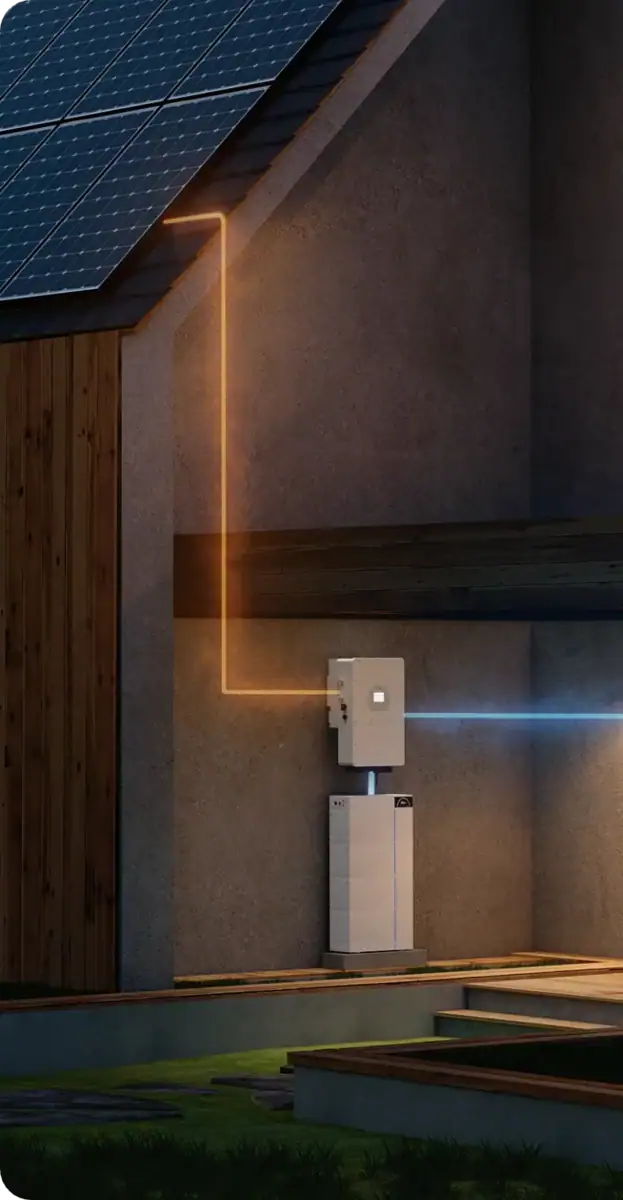
For PV-plus-storage projects, the Deye SUN-(25–30)K-SG02HP3-EU-AM3 page lists a 1,000 V maximum PV input, a 150–850 V MPPT range, and a separate 180 V startup threshold. These illustrate why one voltage number cannot represent every design check. Deye’s 100–125 kW three-phase hybrid inverter is one product page to review for larger commercial applications, but installers must use the current datasheet and regional version for actual string limits.

Temperature assumptions should be documented
Air temperature is not the same as cell temperature. Roof color, mounting method, wind, irradiance, rear ventilation, and module construction affect cell temperature. Use a documented method—such as a manufacturer or engineering-model approach—to convert ambient design temperatures into cell-temperature assumptions.
For cold conditions, consider snow-reflection or clear-sky effects where relevant. For hot operating conditions, consider low wind, high irradiance, and mounting arrangements that restrict rear ventilation. Document the assumptions so another engineer can reproduce the calculation.
Common string-sizing mistakes
-
Using the STC Voc without a cold-temperature adjustment.
-
Checking only maximum voltage and forgetting hot-weather MPPT performance.
-
Treating the inverter’s maximum DC voltage as its normal operating target.
-
Adding strings without checking MPPT current and fuse requirements.
-
Mixing modules with different electrical characteristics on one MPPT.
-
Ignoring altitude, shading, cable voltage drop, or regional inverter variants.
-
Copying a string length from another site with a different climate.
Commissioning should include polarity, insulation resistance, open-circuit voltage, operating voltage, current balance, and inverter alarm checks. Record the measured values by string so future troubleshooting has a baseline.
Design for the whole year
The best string length is the one that stays electrically safe and operationally productive across the project’s real temperature range. Use cold Voc to protect the inverter, hot Vmp to keep the array inside the MPPT window, and current checks to protect inputs and conductors. Then verify the selected inverter’s regional datasheet and installation instructions.
FAQ
Why does cold weather increase solar string voltage?
PV module voltage rises as cell temperature falls. Open-circuit voltage is highest in cold, unloaded conditions, so the cold-weather string Voc must be checked against the inverter’s maximum DC voltage.
Why can hot weather cause MPPT problems?
Hot cells produce lower voltage. If operating string Vmp drops below the effective MPPT range, energy harvest can fall. Startup depends separately on whether the available PV voltage and power meet the startup conditions.
Is the module count determined by inverter wattage?
No. Module count in series is primarily a voltage and temperature decision. Total module count and parallel strings also depend on current, power, MPPT allocation, roof layout, and the desired DC/AC ratio.
Can two strings with different orientations share one MPPT?
They can only if the inverter configuration and electrical design permit it, but different orientations may operate at different maximum-power voltages and produce mismatch. Separate MPPTs are often preferable when available.
What information should an installer collect before sizing strings?
Collect the module Voc, Vmp, Isc, Imp, temperature coefficients, inverter voltage/current limits, MPPT and startup ranges, site temperature data, mounting method, roof layout, cable lengths, and local electrical requirements.
Validate the string design before procurement
Need help evaluating a PV-plus-storage inverter architecture? Contact Deye with the module datasheets, site minimum and maximum temperatures, roof layout, array orientation, and required grid or backup functions. A documented cold- and hot-temperature calculation gives the design team a sound basis for selecting the inverter and MPPT allocation.