
If you supply, install, or distribute environmental control equipment, one of the most common questions you will receive from end-users and facility managers is: “Why is my dehumidifier blowing hot air?”
For many customers, feeling warm exhaust air coming from a machine designed to improve indoor comfort can be alarming. However, in the vast majority of cases, this is not a defect—it is a fundamental byproduct of the mechanical dehumidification process.
To help your sales teams, EPC contractors, and end-users better understand their equipment, we have compiled this comprehensive, industry-verified guide. We will explore the exact mechanics of why dehumidifiers generate heat, how to identify abnormal temperature spikes, and when to call in an HVAC professional.
Understanding the Basic Mechanism: How Does a Dehumidifier Work?
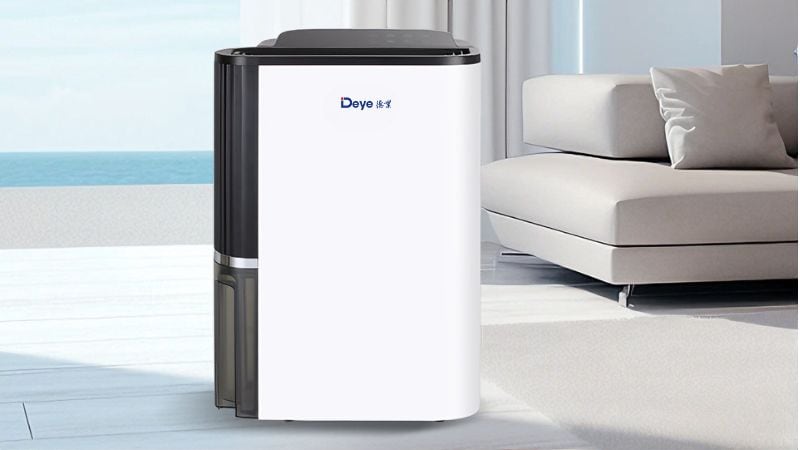
To understand why a dehumidifier produces warm air, we must first look at how it extracts moisture. A commercial or residential compressor dehumidifier operates similarly to an air conditioning unit, utilizing a closed-loop refrigeration cycle.
The process unfolds in a few distinct steps:
- Air Intake: The unit’s fan draws in humid ambient air from the room. As the air enters, it passes through a filter, picking up airborne dust particles and improving overall indoor air quality.
- Moisture Extraction: The air is forced over a set of freezing-cold evaporator coils. Because cold air has a much lower capacity to hold moisture than warm air, the air is cooled below its dew point (typically down to around 50°F / 10°C).
- Condensation: As the air cools, it can no longer hold its water vapor. The moisture condenses into liquid water droplets on the coils and drips safely into a collection tank or is pumped out through a continuous drainage hose.
- Reheating and Exhaust: Here is where the heat is generated. Before the newly dried, chilly air is expelled back into the room, it must pass over the condenser coils. These coils are hot because they carry the heat absorbed during the cooling phase, plus the mechanical heat generated by the compressor.
A Common Industry Misconception: It is frequently (and incorrectly) suggested that opening doors and windows guarantees maximum functionality. In reality, industry best practices dictate that dehumidifiers work most efficiently in closed, highly sealed environments. Introducing outside air forces the unit to work harder, reducing efficiency and increasing the heat output.
What is the Normal Exhaust Temperature?
Distributors and EPC contractors must set the right expectations for their clients. Compressor dehumidifiers will always expel air that is warmer than the ambient room temperature.
On average, the air leaving a healthy compressor dehumidifier will be 3°F to 5°F warmer than the air inside the room. The exact temperature output depends heavily on the specific model, the compressor’s size, and the current ambient temperature of the facility.
If your client notices a slight temperature increase in the room, assure them this is normal. During chilly winter months, this slight heating effect is often viewed as a pleasant bonus. However, during hot summer months, if cooling is the primary goal, an air conditioning unit should be used in tandem with the dehumidifier.
Diagnosing the Problem: Why is the Air Excessively Hot?
While a 3-5°F increase is standard, what happens when the unit starts spewing aggressively hot air? If a unit is blowing air that feels like a space heater, it is time to troubleshoot.
Below is a quick-reference diagnostic table designed for facility managers and HVAC technicians.
Table 1: Troubleshooting Abnormally Hot Dehumidifier Exhaust
|
Fault / Symptom
|
Root Cause Analysis
|
Recommended Troubleshooting Procedure
|
|---|---|---|
|
Air feels aggressively hot, unit runs constantly
|
Dirty Evaporator Coils: Dust and debris have coated the coils, acting as insulation. The coils cannot properly cool the incoming air.
|
Unplug the unit. Remove the casing and gently clean the evaporator coils with a soft brush and approved HVAC coil cleaner. Replace air filters.
|
|
Room temp exceeds 90°F (32°C), unit blows very hot air
|
High Ambient Temperature: The room’s baseline temperature is simply too warm. The unit is reheating already-hot air.
|
Turn off the dehumidifier. Use dedicated air conditioning to lower the baseline room temperature before resuming dehumidification.
|
|
Air is hot, but humidity levels are not dropping
|
Compressor Malfunction / Refrigerant Leak: The compressor is failing to cycle properly, or a refrigerant line has a microscopic leak.
|
Immediate shutdown required. This is a complex mechanical failure requiring a certified HVAC technician to check pressures and repair leaks.
|
|
Unit rattles, casing is hot to the touch
|
Failing Motor / Overheating Compressor: Mechanical friction due to worn bearings or electrical faults causing the internal components to overheat.
|
Disconnect power immediately to prevent fire hazards. Consult the manufacturer for warranty replacement or professional repair.
|
Deep Dive: 3 Reasons Your Dehumidifier is Blowing Hot Air
Let’s explore the mechanical failures outlined in the table above in greater detail.
1. The Evaporator Coil is Filthy
If a dehumidifier is blowing air that is significantly hotter than usual, a dirty evaporator coil is the most likely culprit.
When dust and grime accumulate on the freezing evaporator coils, it creates a thermal barrier. The dehumidifier is essentially blocked from chilling the incoming air down to that crucial 50°F mark. Because the air is not cooled sufficiently in the first step, when it passes over the hot condenser coil in the final step, it is reheated to a much higher temperature than normal.
Pro Tip for EPC Contractors: Always advise clients to clean their reusable air filters monthly. Maintaining a clean filter prevents 90% of evaporator coil blockages.
2. The Ambient Room Air is Too Warm
Dehumidifiers are subject to the laws of thermodynamics. As previously established, a dehumidifier produces air that is slightly hotter than the air it draws in.
If a facility manager places a dehumidifier in a non-ventilated industrial laundry room where the ambient temperature is already 85°F, the machine will draw in that 85°F air, process it, and expel it at 90°F or higher. The refrigeration cycle adds heat to the environment; it does not remove it. Portable air conditioners vent their mechanical heat outside through a window exhaust; portable dehumidifiers vent that heat directly back into the room.
3. The Compressor is Malfunctioning
The compressor is the heavy-duty “heart” of the dehumidifier. It drives the heat exchange cycle by forcing the chemical refrigerant through the evaporator and condenser coils.
If the compressor is malfunctioning, or if there is an imbalance caused by a refrigerant leak, the dehumidifier cannot execute the cooling phase correctly. The motor will continue to run, generating mechanical heat, but no moisture will be extracted.
Unfortunately, a faulty compressor or a leaking refrigerant line cannot be patched quickly by an amateur. The optimal course of action is to call an HVAC expert to check operating pressures. For smaller, portable residential units, it is often more cost-effective to replace the unit entirely rather than pay for a complex compressor rebuild.

Compressor vs. Desiccant Dehumidifiers: Correcting the Record
It is important to clarify a major technical distinction regarding different types of dehumidifiers. Compressor units account for roughly 84.5% of portable dehumidifiers used in North American homes and businesses.
However, there is another category: Desiccant Dehumidifiers. A common myth is that desiccant models do not produce heat. In reality, industrial desiccant dehumidifiers operate by passing air over a rotating wheel of moisture-absorbing material (like silica gel). To keep the wheel working, an internal heater must “regenerate” or bake the moisture out of the wheel.
Because of this internal thermal heater, desiccant dehumidifiers actually expel significantly warmer air than compressor models. If an end-user requires a dehumidifier that works efficiently in near-freezing temperatures (such as in a cold storage warehouse), a desiccant model is required—but they must be prepared for a noticeable increase in exhaust heat.
Conclusion & Next Steps for B2B Procurement
Understanding the mechanical realities of dehumidification allows B2B buyers, distributors, and facility managers to make informed procurement and maintenance decisions. A dehumidifier blowing warm air is usually a sign of a healthy refrigeration cycle at work. However, sudden spikes in exhaust heat coupled with a failure to collect water indicate that coils need cleaning or the compressor requires professional evaluation.
Partner With a Trusted Manufacturer
As a leading wholesale manufacturer of premium commercial, industrial, and residential dehumidifiers, we engineer our units for maximum moisture extraction, optimized thermal regulation, and incredible durability.
Supported by a professional team of technical sales representatives and dedicated customer care personnel, we guarantee rapid order processing and prompt global delivery. If you are looking to upgrade your HVAC catalog with highly reliable environmental control equipment, please fill out the contact to connect with our wholesale team today.
Frequently Asked Questions (FAQ)
Q1: How can I tell if my dehumidifier has a compressor?
A: If your unit is heavy, operates with a noticeable humming sound (similar to a refrigerator), and collects water in a drip bucket, it is almost certainly a compressor model. Compressor units are the standard for 85% of the market. Lighter units that do not have a compressor are usually desiccant models.
Q2: Will a dehumidifier heat up a small room?
A: Yes. Because a compressor dehumidifier exhausts air that is roughly 3-5°F warmer than the intake air, running it continuously in a small, enclosed space (like a bathroom or server closet) will gradually raise the overall room temperature.
Q3: Can I route the hot exhaust air outside?
A: Standard portable dehumidifiers are not designed to be vented outdoors. If you need to remove moisture while simultaneously cooling a space and exhausting heat outside, you should invest in a portable air conditioning unit, which inherently dehumidifies while cooling.
Q4: My dehumidifier is blowing hot air but no water is collecting in the tank. What is wrong?
A: This is a classic symptom of a failed compressor or a complete loss of refrigerant. The fan is running (blowing air), but the coils are not getting cold enough to condense the moisture. If the air filter and coils are completely clean and the issue persists, the unit requires professional HVAC repair or replacement.