
A dehumidifier helps prevent mold by lowering indoor humidity to levels that make growth unlikely, but it won’t remove established mold colonies or fix leaks. You’ll learn how humidity fuels mold, what a dehumidifier actually does, and when you need additional cleanup or repairs.
This guide explains how a dehumidifier helps in the fight against mold, how to choose the right dehumidifier, and when you need professional mold remediation.
How Mold Growth Starts: Understanding Mold Spores and Excess Moisture
Mold needs moisture to grow. Mold spores exist everywhere indoors; they only become a mold problem when they find excess moisture and a food source. High humidity creates the perfect environment for mold to thrive on damp surfaces like walls, wood, and fabric.
Where Mold Thrives in Your Home: Basements, Bathrooms, and Hidden Areas
In your home, you might find mold like Cladosporium on fabrics, Penicillium on water-damaged materials, or Aspergillus releasing spores in the air. Stachybotrys (black mold) needs constant wetness, often from leaks. Basements, bathrooms, and areas with poor ventilation are common breeding grounds for mold.
The Lifecycle of Mold Spores and What They Need to Grow
Mold spores need moisture to grow. When relative humidity (RH) stays above 60%, it creates ideal conditions for mold. Keeping indoor RH between 30-50% is crucial for mold control. Daily activities like cooking or drying clothes indoors add moisture to the air, raising the risk.
Condensation on cold surfaces—pipes, windows, or exterior walls—creates local microclimates where mold starts even when room RH seems acceptable.
Health Risks: How Mold in Your Home Affects You
Exposure to mold can trigger a range of health issues. For many, short-term contact causes nasal congestion, sore throat, coughing, and eye irritation. Those with allergies may experience more severe allergy symptoms, including wheezing, skin rashes, or asthma attacks.
Some molds produce mycotoxins, which can affect sensitive individuals, though severe poisoning is uncommon. Immunocompromised people, infants, and those with existing respiratory conditions face higher risks from prolonged exposure.
How a Dehumidifier Helps Control Mold: Reducing Humidity to Prevent Growth
A dehumidifier lowers indoor moisture and helps reduce conditions that let mold thrive. It removes water from the air, collects it, and keeps relative humidity in a range that makes mold less likely to grow.
The Mechanics: How Dehumidifiers Work to Remove Moisture
Most dehumidifiers work by drawing in moist air from your room. Inside the unit, this air passes over cold coils, causing the moisture in the air to condense into water. This water is collected in a tank or sent directly to a drain, effectively removing excess moisture from the air.
The drier air is then slightly warmed before being released back into the room. By continuously cycling the air, dehumidifiers work to lower the overall moisture levels in the air, which is how they help prevent mold. For best performance, place your dehumidifier where air can circulate freely and keep doors or windows closed.
Change the Environment and Make it Harder for Mold
Mold typically needs relative humidity above about 60% to grow on many surfaces. You can reduce that risk by keeping indoor RH between 30% and 50%, which most dehumidifiers can maintain when sized appropriately.
Damp materials—carpets, drywall, insulation—can still support mold if they remain wet. Use a dehumidifier along with fixing leaks, improving ventilation, and drying wet materials within 24–48 hours. Monitor with a hygrometer so you know actual RH levels.
A dehumidifier reduces airborne moisture and surface condensation, lowering spore germination and slowing colonization.
Choosing the Right Dehumidifier to Prevent Mold Growth
Pick a unit sized for the space you need to dry and one with features that reduce maintenance and keep humidity steady. Focus on capacity vs. room volume, drainage options, and a reliable humidistat to control setpoints.
Capacity and Room Size: Matching a Dehumidifier to Your Space
-
Select the correct capacity by calculating room size and moisture level. For a damp basement, choose 50–70 pints; for a small bathroom, 20–30 pints. In very wet spaces, select a higher capacity to handle the moisture load.
-
Place the unit centrally with clear airflow. Avoid blocking the vents for drawing in moist air and releasing dry air back into the room.
-
For multi-room coverage, use multiple smaller units or one powerful dehumidifier sized for the largest connected space.
-
In cool, damp areas like basements, note that performance drops. Choose a low-temperature model for effective moisture control and to prevent structural damage.
-
Maintain your dehumidifier by cleaning the air filter regularly for optimal operation and better air quality.
Key Features for Mold-Prone Areas: Auto-Drain, Humidistat, and More
Choose models with an adjustable digital humidistat so you can set and maintain a target RH (30–50% recommended). A reliable humidistat reduces mold risk by cycling the compressor only when needed and prevents constant high humidity.
Prefer continuous or auto-drain options if you can’t empty a bucket daily; gravity drain or pump-assisted drain lowers maintenance and prevents overflow. Look for units with washable filters, an anti-frost function for cool spaces, and an automatic restart after power loss. Energy Star certification and a programmable timer help you run the unit efficiently.
Common Myths About Dehumidifiers And Mold
Myth 1: “Using a dehumidifier can kill existing mold.”
Fact: Dehumidifiers do not kill mold. They are prevention and containment devices. Mold is a fungus, and while it becomes inactive and stops growing in low humidity (below 60%), the spores and colony are not “killed” by dry air alone. To remove mold that’s already growing on walls or furniture, you must physically clean it with appropriate agents or hire a professional for mold remediation.
Myth 2: “A dehumidifier is a complete solution for all mold problems.”
Fact: A dehumidifier only addresses airborne excess moisture (humidity). It cannot fix the moisture problem at its source, such as a leaky pipe, a flooded basement, or rising damp in walls. These structural issues create a constant breeding ground for mold. You must fix the leak first; then, a dehumidifier becomes a key tool for moisture control and drying out materials.
Myth 3: “An air purifier does the same thing as a dehumidifier for mold.”
Fact: These appliances address different parts of the issue. A dehumidifier works to reduce humidity, attacking the moisture mold needs to grow. An air purifier with a HEPA filter is designed to capture airborne mold spores, improving air quality. For comprehensive mold prevention, both can be used together.
Myth 4: “The main goal is to remove all humidity from the air.”
Fact: The goal is humidity control, not elimination. Extremely low humidity (below 30-35%) can be uncomfortable and damage your home. The ideal range to prevent mold while maintaining comfort is between 30% and 50%. A good dehumidifier allows you to set this target, creating an environment that’s harder for mold to thrive in without other drawbacks.
Conclusion: Strategy for Effective Mold Control and Prevention
A dehumidifier is a powerful tool to help prevent mold growth by controlling excess moisture in your home. It reduces the humidity mold needs to thrive, protecting your home and indoor air quality.
Remember, it is not a solution for removing existing mold. For active mold growth, you must clean the affected area and fix the source of the moisture first. Use a dehumidifier as part of a complete strategy that includes ventilation and repairs.
Choose the right dehumidifier for your space, maintain it by cleaning the air filter regularly, and use it consistently to keep your home drier and healthier.
Fight Mold Effectively with Deye’s Dehumidifiers
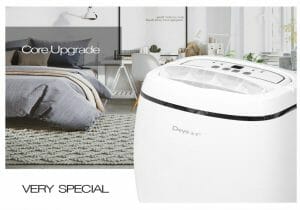
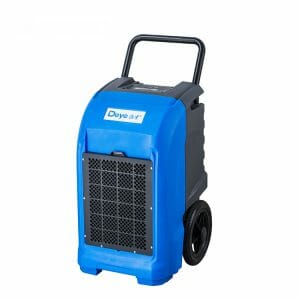
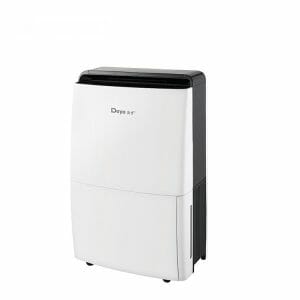
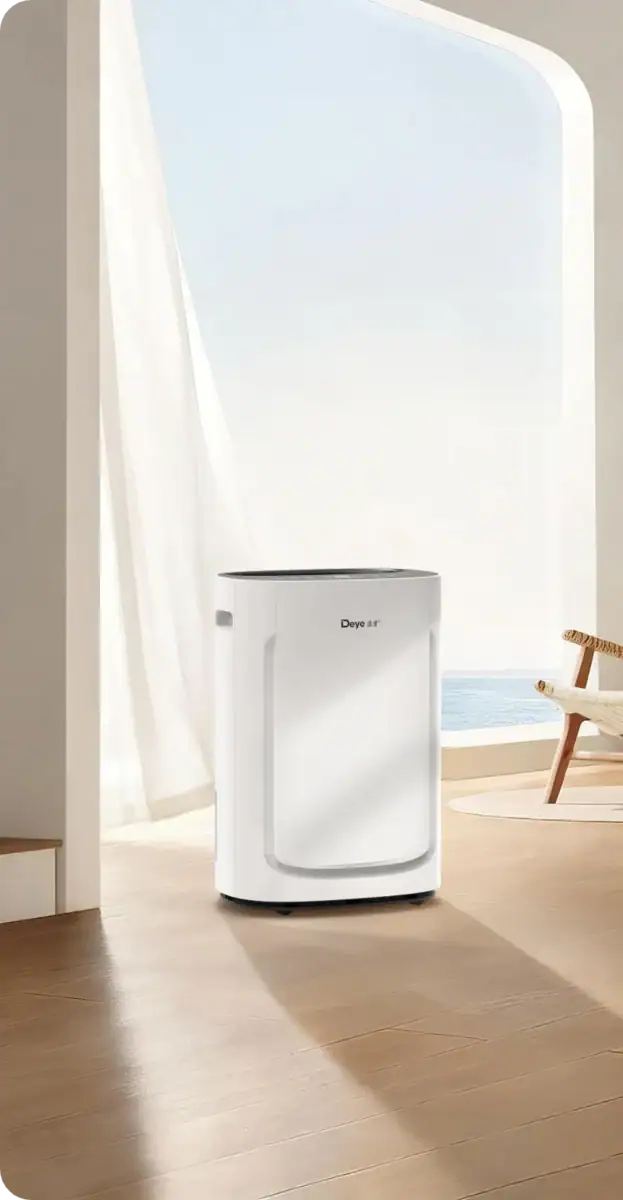
Deye home dehumidifiers offer a blend of innovative technology and energy efficiency to create a healthier and more comfortable home environment. They effectively remove excess moisture, helping to prevent mold, mildew, and dust mites, while also protecting your property.
Here are some key reasons to choose a Deye home dehumidifier:
- Continuous Drain Facility: Enjoy uninterrupted operation with a convenient drain hose system, eliminating manual water tank emptying.
- Advanced Air Purification: Improve your indoor air quality with integrated air purification technology.
- Clothes Drying Function: Utilize specialized settings for faster, more economical laundry drying.
- Whisper-Quiet Operation: Experience peace and quiet with noise levels as low as 36dB, ideal for any room.
Ready to berathe different? Explore our full range of products and contact us for a free quote.